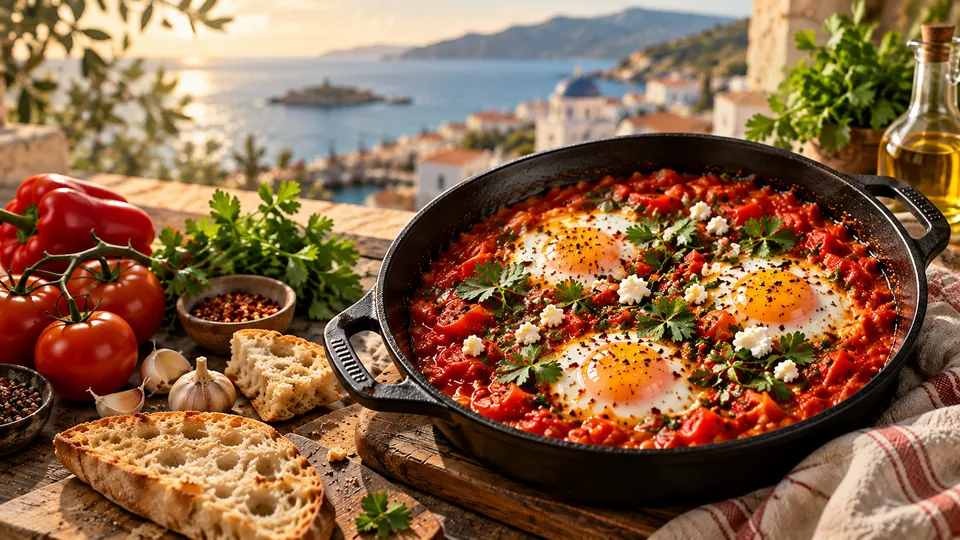
01Classic Shakshuka
Our basic recipe serves two and uses four eggs, 400 g tomatoes, one pepper and one onion. First, gently cook the vegetables, then reduce the sauce with the lid off. Only add the eggs once the base is thick enough. This lets you control the cooking of the sauce and eggs separately.
02With Feta or Mozzarella
Crumble feta over the finished dish or add it shortly before the end of cooking. Salt the sauce sparingly at first, as the cheese adds salt too. Drain the mozzarella and tear it into small pieces: too much brine would thin the sauce. Both cheeses are optional additions and contain the allergen milk.
03Spinach and Courgette in the Tomato Sauce
Let the spinach wilt in the sauce before adding the eggs, and allow any water it releases to evaporate. Cut the courgette into small pieces and gently cook it with the other vegetables. Do not add large quantities of raw ingredients with a high water content at the same time as the eggs: otherwise, the base will become watery while the egg whites are already setting.
04Green Shakshuka
A green base might contain leeks, spinach, peas and herbs, for example. Cook the vegetables first and reduce any excess liquid, then make room for the eggs. Simply leaving the tomatoes out of the red version is not enough, as this changes the quantity, moisture content and flavour of the base.
05Chickpeas and an Egg-free Version
Add cooked chickpeas or rinsed, drained tinned chickpeas to the sauce before the eggs and heat through thoroughly. Without eggs, this becomes a vegetable variation. To make it vegan, leave out feta, yoghurt and other dairy products too.
06Making the Most of Variations
It is best to change one ingredient at a time and watch the consistency. The basic rules remain the same: a thick base, enough space and gentle heat. The precise quantities and timings on this website apply to the main red shakshuka recipe; these suggestions are not a substitute for a complete recipe for the green version.