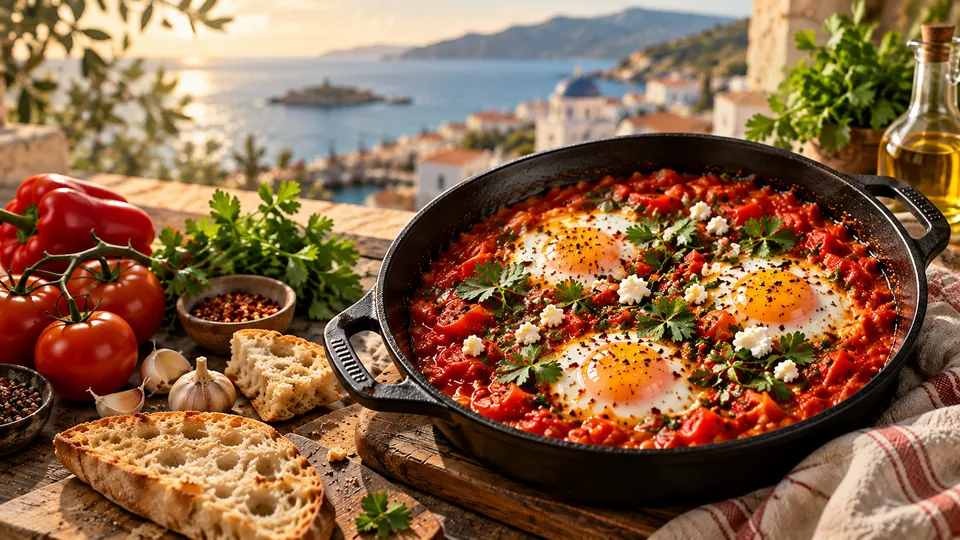
01Linguistic Roots and Etymology
The word shakshuka (Arabic: شكشوكة; Hebrew: שקשוקה) originates in Maghrebi Arabic dialects of Tunisia, Algeria and Libya, where it conveys the concept of 'a mixture', 'shaken together' or 'all jumbled up'. Linguists link it to the Arabic verb shakshaka (to shake, agitate, or mix vigorously), while also noting possible Berber (Amazigh) loan roots such as tashaksut, used historically for vegetable stews. Across the Francophone Maghreb, the dish is known as chakchouka or tchoutchouka; in Polish cooking writing, it is transcribed as szakszuka.
02The Columbian Exchange and Pre-Tomato Stews
Because modern shakshuka centres on tomatoes and sweet capsicum peppers, its current crimson form is comparatively modern. Tomatoes and New World chili peppers did not exist in the Mediterranean or North Africa prior to the Columbian Exchange of the 16th century. Early precursors across the Ottoman Empire and the Maghreb were rustic vegetable or minced-meat stews seasoned with wild herbs, leeks, onions and eggs. Only during the 18th and early 19th centuries, as tomatoes and bell peppers adapted widely across Maghrebi soil, did the familiar reduced tomato-pepper foundation emerge.
03The Maghrebi Heartland: Tunisia, Libya and Algeria
North Africa is universally recognized as the geographical and cultural cradle of shakshuka. In Tunisia, where it is considered an essential national dish, chakchouka has long been prepared in heavy iron or earthenware vessels using sweet peppers, onions, tomatoes and garlic, spiked with harissa and ground caraway seeds (karawya). Tunisian cooks frequently prepare seasonal variations—with artichokes, courgettes, or cured meats such as merguez and qadid. In neighbouring Libya and Algeria, related one-pan preparations form a foundation of everyday family cooking.
04North African Immigration and Spread to Israel
The arrival of shakshuka in the Levant is directly tied to the North African Jewish diaspora. During the mass immigration (Aliyah) of the 1950s and 1960s following Israeli independence, more than 250,000 Jews from Tunisia, Libya, Morocco and Algeria settled in Israel. In transit camps (ma'abarot) and working-class immigrant neighbourhoods, families cooked shakshuka as an affordable, deeply flavourful comfort food using readily available market produce and fresh eggs. Over subsequent decades, it crossed communal boundaries to become a national breakfast staple.
05From Working-Class Comfort Food to Global Icon
Shakshuka's commercial popularisation accelerated in the 1980s and 1990s, when Libyan-born restaurateur Bino Gabso opened 'Dr. Shakshuka' near Jaffa's historic flea market, serving individual bubbling skillets alongside thick loaves of fresh bread. The dish's international breakthrough followed in 2012 with Yotam Ottolenghi and Sami Tamimi's internationally bestselling cookbook 'Jerusalem', which introduced shakshuka to home cooks and restaurant menus across London, Sydney, New York and Berlin, transforming it into a global weekend brunch staple.
06Mediterranean Relatives: Menemen to Uova in Purgatorio
Shakshuka belongs to a broad family of Mediterranean egg-and-vegetable dishes that evolved in parallel. In Turkish menemen, eggs are lightly beaten and softly scrambled directly into stewed peppers and tomatoes rather than poached whole. In southern Italy, the Neapolitan classic uova in purgatorio (eggs in purgatory) poaches eggs in a fiery tomato and basil marinara. Spanish pisto manchego and Basque piperade similarly celebrate the harmony of slow-cooked summer vegetables crowned with eggs.